
Uncategorized
Understanding Quality: Inner Root Bark vs. Whole Bark Powder
May
Understanding Quality: Inner Root Bark vs. Whole Bark Powder
If you’ve started searching online for Mimosa hostilis root bark powder, you’ve likely noticed a massive variation in pricing and terminology. Some listings boast “100% Pure Inner Root Bark,” while others simply offer “Mimosa Whole Bark.”
Does it actually make a difference? Absolutely. Whether you are using the powder for precision textile dyeing, traditional leather tanning, or botanical research, understanding the anatomy of the bark will save you time and money.
Inner Bark vs. Outer Bark: The Breakdown
| Attribute | Inner Root Bark (MHRB) | Outer Bark / Whole Bark |
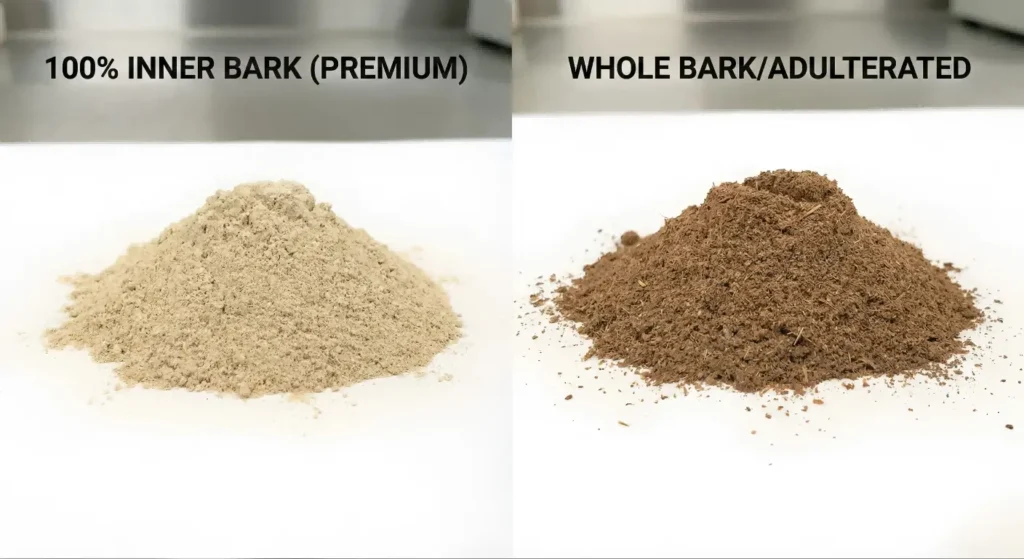
| Color Profile | Vibrant pinkish-purple to deep reddish-brown | Dull grayish-brown with minimal pigmentation |
| Tannin Concentration | Exceptionally High (Dense concentration of active botanical compounds) | Low to Moderate (Contains dead wood tissue and structural fibers) |
| Texture | Fine, uniform powder when milled | Fibrous, stringy, and harder to mix evenly |
| Best Used For | Premium textile dyeing, artisan leather tanning, cosmetic bases | General biomass, basic fuel, low-grade tanneries |
Why Savvy Buyers Insist on Inner Root Bark
The outer bark of the Mimosa tenuiflora tree acts as a protective shield against the elements, meaning it is mostly composed of tough, low-alkaloid, low-tannin structural matter. The inner root bark, however, is the vascular highway of the plant. This is where the tree concentrates its tannins, flavonoids, and protective phytochemicals.
When you buy a cheaper “whole bark” or “stem bark” product, you are paying for filler material that dilutes your results. High-quality inner root bark powder should display a rich, unmistakable purplish-red tint. If your powder looks gray, sandy, or heavily brown, it likely contains a high percentage of outer bark or soil contaminants. Always look for vendors who specifically guarantee sustainably harvested inner root bark.
